
No products in the cart.
-67%
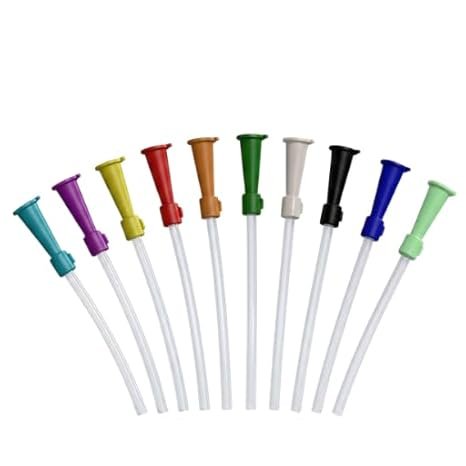
Sterile Suction Catheter (Pack of 10)
Original price was: ₹1,499.00.₹499.00Current price is: ₹499.00.Buy Suction Catheters Online in India
Explore suction catheters online at Medomet for hospitals, clinics, intensive care units, emergency departments, operation theatres, nursing homes, respiratory care facilities, and institutional medical-supply requirements.
The available range may include sterile suction catheters in different French Gauge sizes, including 14 FG and smaller pediatric options. Sizes, connector styles, control valves, catheter lengths, packaging quantities, and brands may differ between products.
A suction catheter is a flexible medical tube connected to a suitable suction source. Trained healthcare professionals use it to remove secretions or fluids when suctioning is clinically indicated. The appropriate catheter depends on the suction route, patient condition, airway device, product specifications, and facility protocol.
Check the individual product listing before ordering. Confirm the catheter size, sterile status, tube length, connector design, control type, pack quantity, manufacturer information, and compatibility with the intended suction equipment.
Suction Catheter Size 14 FG
A suction catheter marked 14 FG, 14 Fr, or size 14 uses the French catheter-sizing system. The number identifies the catheter’s external diameter; it does not mean that the catheter is 14 millimetres wide.
A 14 FG catheter must not be selected only because it is commonly listed among adult suction products.
The appropriate size depends on factors such as:
- The intended suctioning route
- The internal diameter of the airway tube
- The patient’s clinical condition
- The type and thickness of secretions
- The catheter manufacturer’s instructions
- The healthcare facility’s protocol
Before purchasing a 14 FG suction catheter, check its sterility, catheter length, tip design, lateral openings, connector style, control valve, packaging condition, and compatibility with the prescribed suction system.
Pediatric Suction Catheter Options
A pediatric suction catheter is selected when an infant or child requires professionally supervised suctioning.
Smaller catheter sizes are commonly used for pediatric care, but age alone does not determine the correct product. Healthcare professionals must consider the child’s airway, the type of suctioning required, the internal diameter of any artificial airway, and the instructions supplied with the catheter.
When comparing pediatric suction catheters, review:
- French Gauge size
- Outside diameter
- Catheter length
- Sterility
- Distal-tip design
- Lateral-eye configuration
- Connector type
- Depth markings, when present
- Artificial-airway compatibility
- Single-use instructions
Pediatric suctioning should be carried out only by trained healthcare professionals or properly trained caregivers following a patient-specific care plan.
What Suction Catheter Size Is Used for a Newborn?
There is no single suction catheter size suitable for every newborn.
The correct choice depends on whether suctioning is oral, nasal, endotracheal, or through a tracheostomy. For newborns with an endotracheal tube, the catheter must be selected according to the tube’s internal diameter and the neonatal unit’s protocol.
Newborn suction-catheter selection must be made by the treating neonatal or respiratory-care team. Parents and untrained caregivers should never estimate the size based only on the baby’s age or weight.
Before a catheter is used in home care, the clinical team should provide clear instructions covering:
- The prescribed catheter size
- The correct suction route
- Maximum insertion depth
- Compatible suction equipment
- Pressure settings
- Hygiene precautions
- Replacement and disposal procedures
- Actions to take during an emergency
Suction Catheter Parts: Names and Functions
Although designs vary between manufacturers, a standard flexible suction catheter may contain the following components.
Distal Tip
The distal tip is the end introduced towards the suction area. Many products use a smooth or rounded tip designed for controlled professional use.
Lateral Eyes
Lateral eyes are small openings positioned near the distal tip. They allow fluids or secretions to enter the catheter.
Flexible Catheter Tube
The catheter tube carries the removed material towards the suction tubing and collection system. Its length, flexibility, material, and transparency may vary.
Thumb-Control Port
Some models include a thumb-operated control port. The operator uses it to regulate when suction is applied.
Proximal Connector
The connector joins the catheter to compatible suction tubing. Some manufacturers use colour-coded connectors to identify different French Gauge sizes.
Depth Markings
Selected products include printed markings along the tube. These markings may help trained professionals monitor insertion depth according to an established clinical protocol.
Buyers should check the specific product description because not every suction catheter contains the same parts or features.
How a Suction Machine and Catheter Work Together
A suction machine generates negative pressure. Connecting tubing carries this pressure towards the suction catheter, while a collection container receives the removed secretions or fluids.
A typical suction arrangement may include:
- A portable machine or central suction source
- A pressure-control mechanism
- A collection container
- Compatible connecting tubing
- A suitable suction catheter
- Filters or accessories required by the equipment manufacturer
The suction machine and catheter must be compatible, but machine compatibility does not determine the correct catheter size. Catheter size, suction pressure, insertion depth, and suction duration require separate clinical decisions.
Always check the instructions supplied with both the catheter and the suction equipment before use.
How to Choose a Suction Catheter
Consider the following points before placing an order.
Intended Use
Confirm whether the catheter is intended for oral, nasal, endotracheal, tracheostomy, or another stated application.
Catheter Size
Check the prescribed French Gauge size. Do not estimate the size from the patient’s age alone.
Sterile Status
Verify whether the catheter is supplied sterile. Do not use a sterile product if its packaging is open, damaged, wet, or contaminated.
Catheter Length
Confirm that the length is appropriate for the intended clinical application.
Connector and Control Design
Review the proximal connector and check whether the catheter includes a thumb-control valve.
Equipment Compatibility
Ensure the connector and tubing can be used with the facility’s suction equipment.
Packaging Quantity
Check whether the price applies to one catheter, one packet, or a complete box.
Manufacturer Instructions
Review the intended use, warnings, storage conditions, expiry date, disposal instructions, and single-use status.
The final product decision should follow qualified medical guidance and the healthcare facility’s approved protocol.
Medical Disclaimer
Suction catheters are professional medical products. They should be selected and used only by trained healthcare professionals or by caregivers who have received patient-specific clinical training.
Incorrect catheter selection or suctioning technique may cause discomfort, tissue injury, bleeding, reduced oxygen levels, or other complications. Always follow the product label, manufacturer instructions, infection-control procedures, equipment guidance, and institutional protocol.
Do not use a catheter when:
- The packaging is open or damaged
- The expiry date has passed
- The product appears contaminated
- Its size cannot be confirmed
- The connector is incompatible
- The intended application is unclear
- It differs from the prescribed product
This category page provides general product information. It does not replace medical diagnosis, clinical assessment, professional training, or emergency treatment.
Frequently Asked Questions
1. What is suction catheter size 14 used for?
A suction catheter size 14, also written as 14 FG or 14 Fr, may be used for clinical suctioning when considered suitable by a trained healthcare professional. The correct size depends on the suction route, airway size, patient condition, and facility protocol.
2. What suction catheter size is suitable for a newborn?
There is no single suction catheter size suitable for every newborn. The correct size depends on the baby’s airway, suction route, endotracheal-tube diameter, and medical condition. A neonatal healthcare professional must select the appropriate size.
3. What are the main parts of a suction catheter?
Common suction catheter parts include the distal tip, lateral eyes, flexible catheter tube, proximal connector, and thumb-control valve. Some models may also include depth markings or colour-coded connectors.
4. Can a pediatric suction catheter be used at home?
A pediatric suction catheter may be used in medically supervised home care only when recommended by a qualified healthcare professional. The caregiver must receive proper training in catheter size, suction pressure, hygiene, insertion depth, and emergency procedures.
5. Can any suction catheter connect to a suction machine?
No. The catheter connector, suction tubing, and machine must be compatible. Always check the instructions provided by the catheter and suction-machine manufacturers before use.